Helen and Sol Krawitz Holocaust Memorial Education Center
Shimon and Sara Birnbaum Jewish Community Center

- Local Survivor registry
- LARISA BERESLAVSKY
- Local Survivor registry
- LARISA BERESLAVSKY
Survivor Profile
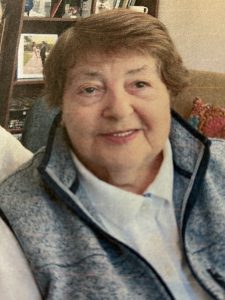
LARISA
BERESLAVSKY
(1936 - PRESENT)
PRE-WAR NAME:
LARISA CHERNYAK
LARISA CHERNYAK
PLACE OF BIRTH:
MOSCOW, USSR
MOSCOW, USSR
DATE OF BIRTH:
JULY, 25, 1936
JULY, 25, 1936
LOCATION(s) BEFORE THE WAR:
MOSCOW
MOSCOW
LOCATION(s) DURING THE WAR:
VILLAGE VYAZOVOY IN PENZA REGION, MOSCOW
VILLAGE VYAZOVOY IN PENZA REGION, MOSCOW
STATUS:
CHILD SURVIVOR, HOLOCAUST SURVIVOR, REFUGEE
CHILD SURVIVOR, HOLOCAUST SURVIVOR, REFUGEE
RELATED PERSON(S):
OLGA GRABOVA - Mother (Deceased),
SIMA GRABOVA - Aunt (Deceased),
JOSIF BERESLAVSKY--BROTHER ,
MOTL GRABOV - Grandfather (Deceased),
SOPHIA DICALOGERO - Daughter,
MICHAL OLGA DICALOGERO - Granddaughter
-
BIOGRAPHY BY LARISA BERELAVSKY
“MY WARTIME CHILDHOOD”
In July of 1941, three weeks after the German invasion of the Soviet Union, I, with my Aunt Sima and her son Wolf, were evacuated from Moscow. My father was drafted to the army. My mother was in a hospital with pregnancy complications.
Imagine yourself five years old, with children and adults, locked up inside of a massive wooden box car with small windows near the ceiling and a large sliding door in the middle of one of the walls. This car is a part of a big evacuation train, carrying families of Muscovites towards the Ural Mountains, far, far to the east of Moscow.
Imagine that you urgently need to use a potty. It stands right beside you on the floor, yet, you cannot bring yourself to use it. People are all around you, and it feels as though every single one of them is staring directly at you. And mom is not here to shield you from embarrassment, only my Aunt Sima, which is not the same at all.
One might say: war was raging all around, people were doing whatever they could to escape the advancing enemy and the bombings – yet, here I am, complaining that even now I cannot forget the physical and emotional pain that I felt the whole time on that train.
It is true. People from the villages fled on foot, bringing on their backs only what they could carry. Too many did not make it…
The city residents were luckier. They evacuated by trains. Most of the people heading to safety were placed in the trains that were previously used for transporting livestock or industrial products. There was neither water, nor toilets of any kind.
It is not surprising that due to unsanitary conditions, dysentery, mostly among children, broke out in the overcrowded cars. My aunt said that many families, whose kids had died, were taken off the train and the train became less crowded. We were lucky. I contracted dysentery shortly before the end of the journey, when we had almost reached our temporary home in the village of Vyazovoy in the Penza region.
I was seriously ill with a high temperature and bloody diarrhea. Aunt Sima somehow got a horse with a cart and took me to the village of Elshanka, there was a hospital there. I remember the cold hands of the old first-aid man on my stomach, and how he said the words “Cahors wine”, “oak bark”, and a completely new word, ”bacteriophage”, a real cure for dysentery. Aunt Sima, somehow, procured bacteriophage and I slowly began to recover.
The stronger I became physically, the more I missed my mom. Aunt Sima wanted me to look better by the time my mother arrived. She tried her best to feed me, and strictly ordered me to finish what I was eating, but I couldn’t eat. I was thinking about my mom all the time. Many times, when aunt Sima wasn’t home, I ran out the gate and screamed with all my might: ”M-a-a-a!” – I thought; maybe; she would hear me.
After mid-July, Moscow came under a barrage of terrifying bombings. During one of those long and heavy air raids, my mom gave birth to a son — Iosif (Joseph). As soon as he came into the world, Joseph and Mom were rushed down to the bomb shelter.
On the seventh day after Joseph’s birth, Mom was discharged from the maternity hospital. The following day, the eighth, according to Jewish law, the circumcision was to take place. Nazis bombed Moscow without a break. And then Grandpa Motl, a deeply religious man (he used to be a Cantor in the synagogue of a big Ukrainian shtetl) said: ”A human life is more important than traditions and customs.” He and Mom quickly began to get ready for evacuation. I heard these same words many years later, here in America, and I was amazed, once again, by Grandpa’s wisdom.
At the end of 1941 the Germans were stopped near Moscow and our family decided to return.
We returned to a ransacked home. Our Russian neighbor, who did not evacuate, had looted all the Jewish apartments in our courtyard; she hadn’t touched the Russian ones. Mom found many of our belongings in her possession and reclaimed them after a heated confrontation.
By the age of six, I already knew that there was nothing good about being Jewish. Neighborhood boys older than me usually gathered at the entrance to the courtyard. I always tried to slip past them quickly, but I rarely succeeded. Usually, two or three of them would come right up to me and would mimic the intonations of my Jewish neighbors, singing:
The Kikess, taking it slow,
crossed the roadway, row by row.They didn’t beat me, but they never let me simply pass by because they instinctively sensed that I was afraid of them. Every time, they tried to push me or trip me so that I would fall, and they pretended that they were going to flick me on
the forehead. I tried with all my might to keep my balance, pressing my feet into the ground and tucking my head into my shoulders.
This usually happened on the other side of the yard, where my mother couldn’t see them. Once, when they were on our side of the yard, one of them started teasing me: “Kikess Khayka was selling eggs!” – I screamed “Ma-a-a!” and my mother came out. She was holding a rolling pin. Mom said loudly, so that everyone in the yard could hear, “If I hear or see anything like that again from anyone, I’ll smash their head with this rolling pin and take them to the militia precinct myself.” Mom’s threat worked – on our side of the yard.
In the third grade, we started learning French. The French teacher was a brilliant educator. She taught us poems and songs and staged skits based on short stories.
Once she told us to quickly count aloud to twenty and back. “In French?” – I asked carelessly. “No, in Yiddish” -replied the teacher, and the third-graders stamped their feet with delight… Being Jewish was to be different from everyone else with a huge minus sign.
The longer I live, the more I think: why am I so fixated on the small details of my childhood Jewish bitterness? Because I am haunted by a persistent thought: if, back then, my neighborhood had been located just a hundred miles west of Moscow, it is possible that some of the boys who teased me – “Kikess Khayka was selling eggs!” – or classmates who hated “Kykes that ran away from the Germans”, or our neighbor who looted Jewish apartments – that any of those people might had brought me right to Gestapo, as it happened in the Ukrainian village of Dobrovelichkovka, where my mother was born. When Nazis arrived there, the local teacher, haverte (comrade) Chaya, who was Jewish, had tried to hide in distant villages at first, but then returned to Dobrovelichkovka in the hope that “the walls of her home would protect her”. On that very day her students brought her to the Gestapo…
And so, when I hear from kids, students, or AI media some modern variation of “Kikess Khayka was selling eggs!”, and I don’t try to stop them – it’s a step toward the Holocaust. It’s a grain of sand in the foundation upon which the Holocaust grows, and it is just as painful.
-
SURVIVOR INTERVIEW of larisa bereslavsky
- Date: June 24, 2026
- Location: Home of Larisa Bereslavsky and daughter Sophia.
Q. When does the post-war period begin for you? When you ended your biography you were in the third grade. What did you experience after that time?
A. The last postcard my father sent from the front was dated September 5, 1941. There were no further letters from him. Every inquiry we made met with the same response: “Private Sh. Kh. Chernyak is not listed among the killed, wounded, or missing in action.” This answer gave us hope that Dad was still alive. That hope vanished when the end of the war with Germany was announced on May 9, 1945. Mom began receiving a meager allowance for the two children of a fallen soldier. That is how our postwar life began.
Mom, my little brother, and I lived in extreme poverty, in a tiny room without running water, where grass was growing between the floorboards. We had to wait over twenty years to get a decent place to live, even though my mother was the widow of a fallen soldier and was legally entitled to priority housing.
Grandpa Motl lived with us. During the evacuation, he worked as a swineherd in the village. In post- war Moscow, he worked as a guard at a big brick building next door to us. At the same time, he secretly helped Jewish boys prepare for their bar mitzvahs. It was extremely dangerous, because in the late 1940s and early 1950s, anti-Semitism was raging in the Soviet Union, and the country went through a wave of government-organized anti-Semitic trials, including the “Doctors-murderers Case” and the execution of the Jewish Anti-Fascist Committee. It must be noted, nobody turned grandpa in. And many years later, my cousin met people in Israel who were grateful to our grandfather for helping them remain Jewish back then.
Q. What happened to your family members?
A. I never knew my maternal grandmother Chaya. She passed away in 1933, three years before my birth. My Jewish name is Chaya, after my grandma.
Grandpa Motl passed away in 1960.
Three members of our family were killed in the front during WWII: my father Shlomo Chernyak, his younger brother Isaak Chernyak, and my mother’s younger brother Yefim Grabov.
My mom became a widow at the age of 26 with two kids: me and my brother Joseph, who never saw his father. Mother had no profession, so she did whatever work she could find—from sewing soldiers’ mittens and poncho-tents to working as a shop assistant.
My brother and I grew up and received college education. He graduated from musical college and became a cellist. I worked at a publishing house as a books designer.
In 1956 I married Rafail Bereslavsky. He had graduated from the Institute of Civil Engineering and Architecture. We have a daughter, Sophia.
My brother Joseph married a few years later. Unfortunately, his wife died from pancreatic cancer at the age of 28. Joseph was left with their five-year-old son Michael. Michael’s grandmother, our mom filled the maternal void left by Tanya’s death.
Q: When and how did you and your family emigrate to the United States?
А. In the mid-seventies, after graduation from Printing and Publishing College, Sophia was trying to find a job. She was interviewed at several publishing houses, but as soon as they learned she was Jewish, she would be told, “That position was filled just yesterday” or “The position has been eliminated”. At that time The Soviet Union was pursuing a policy regarding Jews known as the “Three NOs”: NO hiring, NO firing, and NO promotion. At that time an enormous wave of Jewish emigration from the Soviet Union began. Out of desperation Sophia once said that emigrating was her only option. My mother was a staunch supporter of the idea. “What are you waiting for, if you can’t do anything for your children in this cursed country?” she would ask my brother and me. We all understood perfectly well that our children had no future in the U.S.S.R. The family decided to emigrate.
In order to apply for emigration visas, we needed to have an official invitation from a relative in Israel. Our cousin, who lives in Israel, sent two separate invitations: one for me, Sophia and Rafail, and another for Joseph, his son Michael and our mom. I received my invitation very quickly. Joseph didn’t receive his at all. Apparently, there was an order to post offices to strictly limit deliveries of mail in special envelopes that were used only for invitations. Our cousin kept sending invitations to my brother persistently, but they all were intercepted.
The validity period of my own invitation was running out. I couldn’t even imagine leaving without Mom. We decided it would be better if Mom went with me, Sophia, and Rafail, while Joseph and Michael waited for an invitation. It was an incredibly difficult decision. We realized there was a strong possibility we would never see each other again. For Mom, the thought of parting with her beloved grandson—whom she had nurtured and cared for—was unbearable. “Dear God, what if little Michael got a tummy ache? Who would he tell? Who would he turn to? Who would help him?” Mom could not withstand the pressure. Nine days after we applied for emigration, she suffered a stroke and passed away. Mom was 65 years old.
On May 12, 1981, Rafail, Sophia, and I left the Soviet Union. After staying in Vienna for three days we went to Italy where we applied for political asylum in the United States. On July 7, 1981, our TWA plane landed in New York.
Our cousin eventually managed to send an invitation for my brother via the Dutch embassy in Moscow. This enabled Joseph and Michael to join us in New York six months after we arrived.
Q. How did you support yourselves in those days?
A. A month after our arrival, Rafail, with a friend’s help, landed a job as a draftsman at a company that built communications towers. Sophia and I worked as paste-up artists at a printing shop. Later, Rafail found a position as an architect at a large construction company. He worked there for thirty-one years — until his retirement.
My brother Joseph switched careers from music to computer programming. His son Michael graduated from NYU and works as a software engineer.
Eventually, Sophia and I also changed careers to become IT developers.
-
HISTORICAL NOTES:
GHETTO AND PERSECUTION IN DOBROVELICHKOVKA
Dobrovelichkovka (now officially known as Dobrovelychkivka) is a town in central Ukraine (Kirovohrad Oblast). During World War II, it was occupied by Nazi Germany on August 1, 1941. According to the 1939 census, 366 Jews lived there at the time , a total of 10% of the population. The entire area witnessed severe persecution, with local Jewish residents registered and forced into a ghetto. Jews were required to wear armbands and forbidden from leaving the ghetto in town. They were forced into heavy physical labor like road work. Jews were prohibited from leaving the ghetto where there was mass starvation. On December 23, 1941, 207 Jews (40 men, 57 women, 45 elderly people and 65 children were shot in a ditch to the northeast of town near the village of Mar’evka. (Source: United States Holocaust Memorial Museum Encyclopedia of Camps and Ghettos)
-
Sources and Credits:
The SSBJCC Holocaust Memorial and Education Center gratefully acknowleges Elise Prezant and Cafe Europa from Jewish Family Service of SHW counties for facilitation of Larisa Bereslavsky’s Survivor Registry data and photographs. The SSBJCC Holocaust Memorial and Education Center also gratefully acknowledges Larisa Bereslavsky’s extensive biography, “My Wartime Childhood,” and her post-war, Interview of June 24, 2026 and her donation of historic and family, digital and electronic photographs. Additionally, the Center acknowleges with gratitude the expert proofreading by Sophia, Larisa’s daugher, and her faciliation of the Bereslavsky registry.